
Living with constant knee pain makes even simple tasks like walking or climbing stairs so difficult. While many people find relief with non-surgical knee pain treatment, sometimes these options are no longer enough.
That is when knee replacement surgery may become the best path to regaining mobility and comfort. But how do you know when it is truly time to consider it?
In this article, we will explore the 10 key signs, how doctors decide, and what treatment options you should consider.
What You Will Learn:
Persistent knee pain, swelling, or stiffness that limits daily movement and sleep often signals advanced joint damage.
When conservative treatments like physiotherapy, injections, or medication stop helping, surgery may be the next step.
X-rays showing severe arthritis, joint space loss, or deformity confirm the need for knee replacement.
Knee Replacement Surgery can restore mobility, ease chronic pain, and help patients return to normal activities within weeks.
What Are the 10 Signs of Knee Replacement Surgery?
Before deciding that knee surgery is necessary, it's helpful to know what to look for. Read on to discover the key signs that knee replacement surgery (partial or total) may be the right option.
Consistent Pain, Even at Rest & Night
When knee pain persists despite rest, medication, or therapy, and worsens at night or when lying down, it is a significant concern. This kind of pain is not just post-activity soreness, but disturbs your sleep or your comfort when you are still. It may point to severe joint damage, cartilage loss, or bone-on-bone rubbing.
Daily Tasks Become Battles
If simple acts like climbing stairs, standing up from a chair, or walking across a room now require effort, pause, or pain, that is a warning. When mobility limitations begin to interfere with your routine, the quality of life drops.
Conservative treatments like physiotherapy or painkillers might help initially, but when function gets severely restricted, knee replacement surgery can restore independence.

Persistent Swelling & Inflammation
Swelling that lingers around the knee joint or frequently returns signals ongoing inflammation or joint instability. Chronic swelling can indicate hidden damage inside the joint and will lead to further stiffness and pain. If this condition becomes chronic, it is a clear warning that conservative knee pain treatment is failing.
Stiffness & Loss of Range of Motion
If you cannot fully bend or straighten your knee, or it frequently feels locked (especially after prolonged sitting), this suggests severe joint issues. Limitation of movement reduces what you can do daily, from tying your shoes to climbing stairs.
Also, stiffness tends to worsen over time. The longer the joint remains stiff without correction, the harder recovery may be after knee replacement surgery.
Visible Deformity or Misalignment
Visual change or deformity, such as the knee or leg looking bowed outward (bow-leg) or inward (knock-knee), is a serious sign. These deformities alter the way weight is distributed across the joint, causing excessive stress on one side and accelerating damage.
Over time, this accelerates damage. If alignment issues are noted alongside pain and loss of function, knee replacement surgery or osteotomy may be needed.
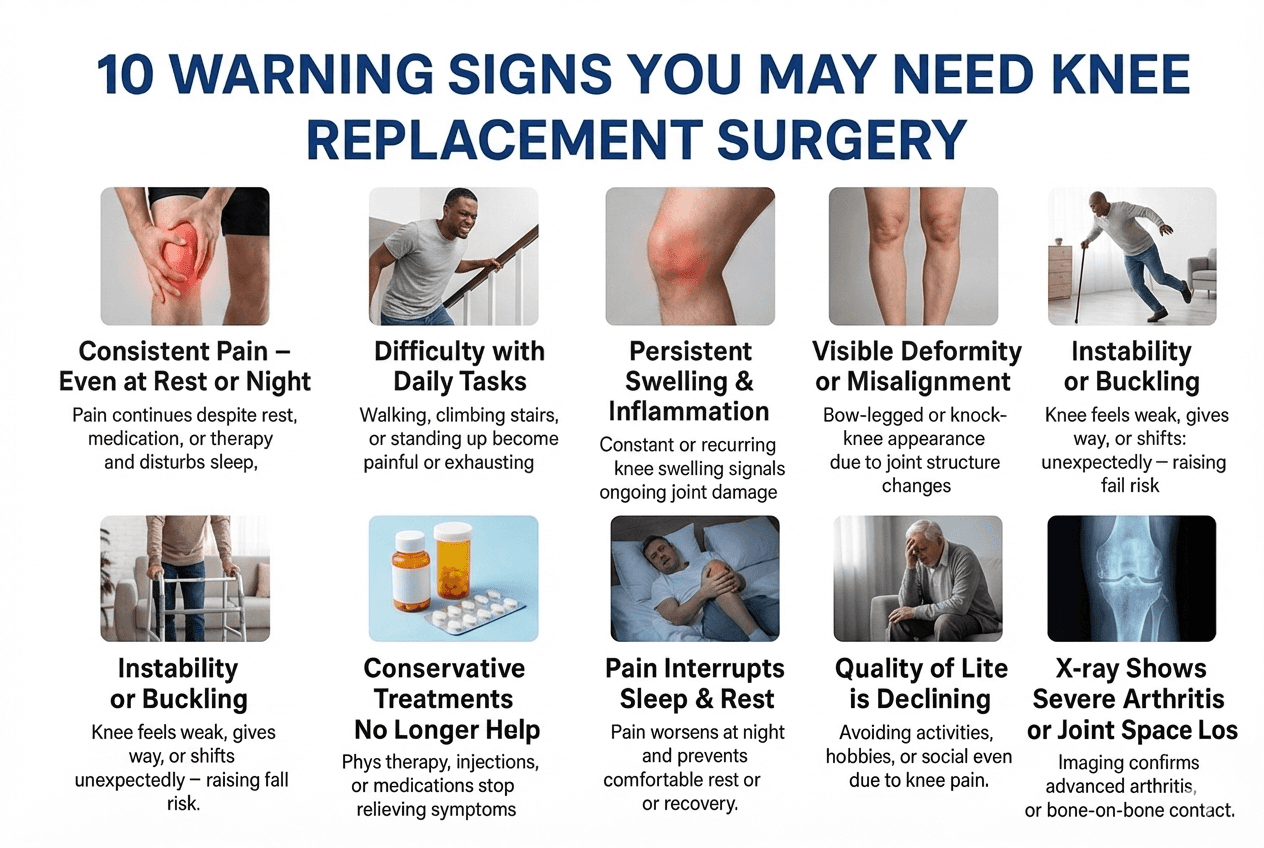
Instability, Buckling, or Giving Way
If your knee feels unstable, frequently gives way, buckles when bearing weight, or shifts unexpectedly, that is a serious sign. Instability could mean ligament laxity or structural damage, not just cartilage wear.
These episodes increase the risk of falls or further injury. When non-surgical supports no longer provide stability, and it is unsafe to move, surgery becomes more strongly considered.
You Tried Everything Conservative, But Nothing Helps
Non-surgical knee pain treatment should be your first line, such as physiotherapy, injections, pain medications, and weight loss. If these treatments stop working, or only give minimal relief after consistent effort, the disease process may have progressed too far.
Pain Limits Sleep & Rest
When knee pain is severe enough that you cannot find a comfortable position in bed or wake up consistently because of it, this signals advanced joint damage.
Good recovery and healing rely on rest. Chronic pain at night accelerates fatigue, stress and lowers overall well-being. If rest does not provide relief, knee replacement surgery may be the path to relief.
Quality of Life & Enjoyment Severely Affected
If you are giving up hobbies, avoiding social outings, cutting back on walking, or even avoiding trips because of painful knees, your knee health is no longer just a medical matter; It is affecting your life!
In this situation, your knee treatment fails to allow you the life you want. Therefore, knee replacement surgery may be necessary for you.
X-Ray Evidence for Severe Arthritis or Joint Space Loss
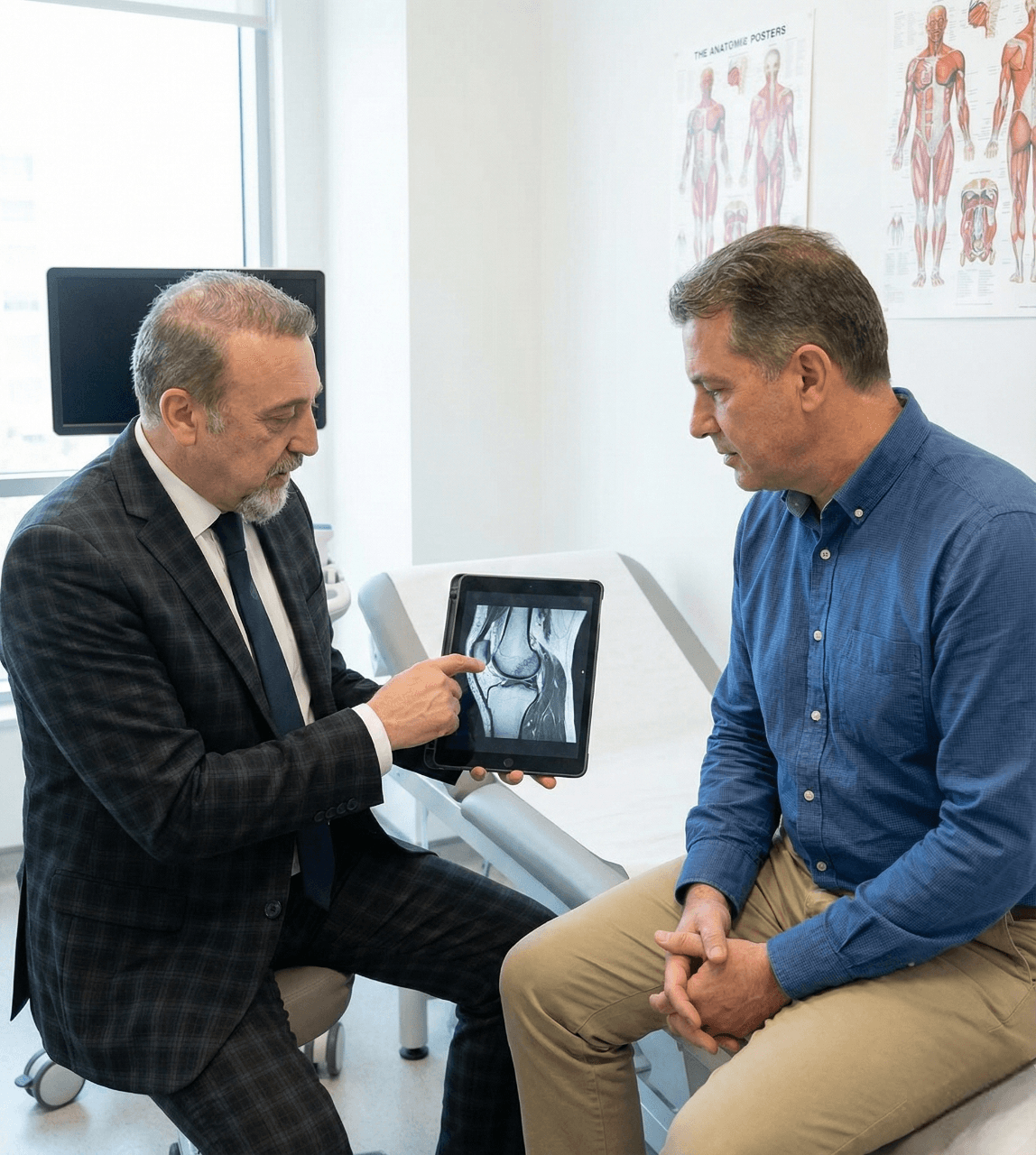
Finally, clinical signs must be backed by imaging. Standing X-rays can show narrowing of joint space, bone spurs, deformity, and bone-on-bone contact. When these radiological findings align with symptoms, that is strong evidence for doctors that conservative treatments may no longer suffice.
Recovery After Knee Replacement Surgery
Recovery from knee replacement surgery is a structured process that begins almost immediately and shows major improvement within the first three months. Most patients start walking with assistance within a day or two. By weeks 2–4, swelling and pain ease noticeably, allowing many patients to reduce or stop prescription pain medicines.
Between 6–12 weeks, patients typically reach major milestones like walking more independently, returning to everyday tasks, and increasing strength and range of motion through supervised physical therapy.
Risks of Knee Replacement Surgery
Knee replacement is generally safe and hugely successful, but like all surgeries, it carries risks. Common risks include:
Wound infection
Blood clots
Stiffness
Nerve or vascular injury
Persistent pain.
The good news is that the vast majority of patients recover without serious issues, especially when the procedure is performed by experienced orthopedic teams and the patient strictly adheres to the rehabilitation plan.

When Should You See a Doctor?
You should see an orthopedic doctor if you are experiencing any of the following:
Your knee pain significantly affects your daily life.
It lasts more than a few weeks despite at-home treatments.
You cannot bear weight on your leg.
Your knee locks or gives way.
You hear a popping sound.
Your knee becomes unusually swollen, red, warm, or deformed.
Pain disturbs your sleep or does not improve with rest and medications.
Early assessment helps catch problems before they worsen and opens up more treatment options.
Conclusion
If knee pain is limiting your daily life and conservative treatments no longer provide relief, knee replacement surgery may be the next step toward restoring mobility and comfort.
Ready to regain your independence? Dr. Farid Ghasemzadeh, a Consultant Orthopedic Surgeon in King’s College Hospital with over 25 years of experience, offers expert care in complex knee surgeries, including partial and total knee replacements. He practices at Dubai Hills Hospital and King's College Hospital Dubai, providing advanced, patient-centered treatment.
What are your thoughts on this? If you have already considered or undergone knee replacement, let us know in the comments what the turning point was for you!
FAQ
Answers to your questions
How long does recovery take after hip replacement surgery?
Will hip replacement surgery relieve all my hip pain?
How long does a hip replacement last?
One click, One plan, Real results
Evidence-led surgery and tailored rehab to restore mobility and confidence.

One click, One plan, Real results
Evidence-led surgery and tailored rehab to restore mobility and confidence.
One click, One plan, Real results
Evidence-led surgery and tailored rehab to restore mobility and confidence.